Foundational Knowledge
The essential building blocks to learning.
It's really important for children to learn the essential skills and knowledge as they move through school. This helps them get prepare and understand what comes next.
This is especially true in their first few years. That's when children learn to read, write, and count. When they build a strong foundation in these areas, they can more easily learn everything else and get ready for a lifetime of learning.
In October 2024, Ofsted shared some helpful ideas about these important skills in their 'Strong Foundations' research. In this research they identified 5 areas of Foundational Knowledge highlighted in the diagram below.
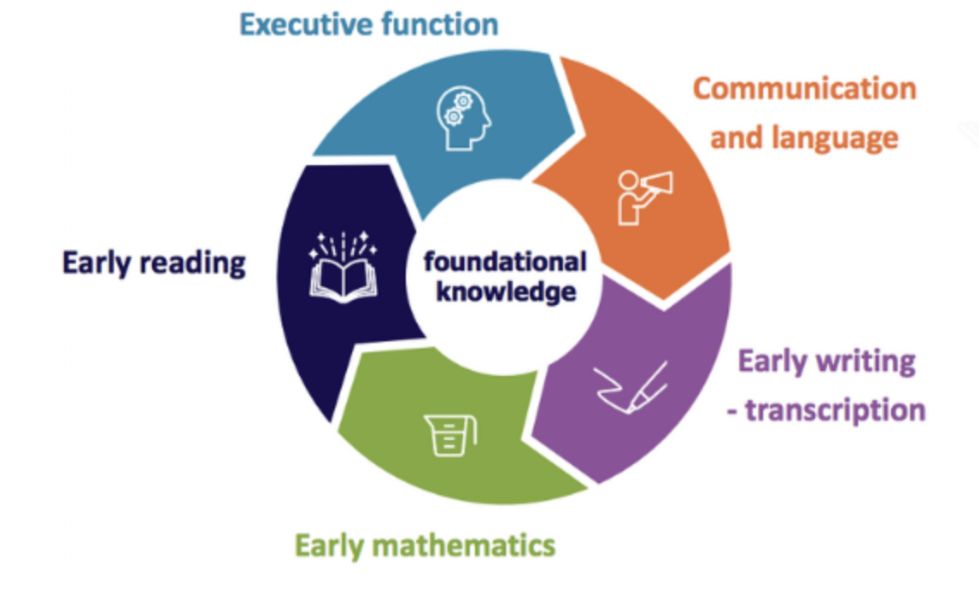
As a school, we have used this research to create our very own list of essential foundational knowledge for our pupils. We want to make sure every child at Maybury Primary School has the strong building blocks they need to succeed in the future.
We use these targets alongside the EYFS Statutory Framework and the National Curriculum to help all our learners. This ensures children do not move on until they are ready and have the foundations to succeed in life.
Foundational Knowledge for EYFS.
The research report ‘Strong foundations in the first years of school’ published by Ofsted (October 2024) emphasised how children need to secure strong foundational knowledge across Reception and KS1 to give them the best chance of educational success. ‘By the end of key stage 1, all children need foundational knowledge: how to communicate, read, write and calculate. This includes the general knowledge that will help them to understand the world around them. Their physical, emotional and social development are also important. Finally, developing executive function is crucial for both learning and well-being.’
At Maybury Primary School, we have identified what we believe are the foundational knowledge essentials every child needs to secure so they can effectively progress across the entire curriculum through their school lives. These non-negotiables have been created through discussion, research and supporting documentation including:
- Voice 21 – Student friendly oracy framework
- EEF Preparing for Literacy
- EEF Improving Mathematics in the Early Years and Key Stage 1
- EEF Early Years Evidence Store
- EYFS Statutory Framework
- Development matters and Birth to 5 non statutory guidance
- Early Learning Goals
- Mary Sheridan's Birth to 5 Years: Children's Developmental Progress
- The Writing Framework
- Ofsted – Strong foundations report
- Bold Beginnings
- The school's EYFS curriculum
Teaching will ensure:
1. New material is delivered in small steps
2. Writing matches the child’s reading / phonic stage
3. Language is key to understanding
4. Focus will be on those who need it most
5. Recognition that children are at different stages of the curriculum. Children with gaps within their foundational knowledge may need more explicit teaching to develop the skills and knowledge they require.